
By Seyi Gesinde

April 28, 2026
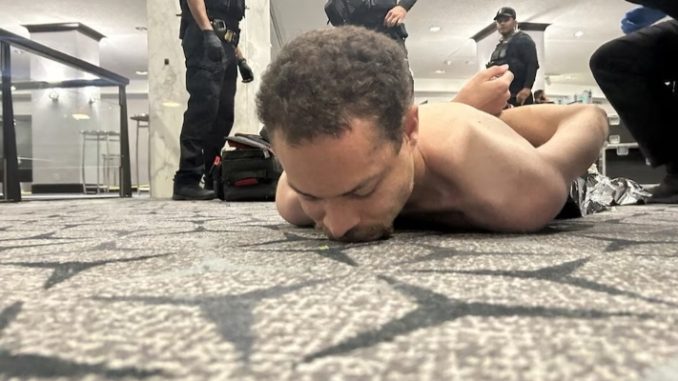
An armed attack that forced the evacuation of President Donald Trump at the White House Correspondents’ Dinner unfolded after a suspect managed to get dangerously close to the main event area inside the Washington Hilton, exposing gaps in perimeter screening and checkpoint control during one of Washington’s most heavily secured political gatherings.
The suspect, identified as 31‑year‑old Cole Tomas Allen of Torrance, California, was a registered guest at the Washington Hilton, which had been closed to the public from 2 p.m. Saturday for the event.
Authorities say access to the building was restricted to hotel guests, dinner ticket‑holders, and accredited media, but Allen’s status as a lodger allowed him to move closer to the secured ballroom corridor than an ordinary visitor could.
This raised early questions about whether hotel‑guest privileges were adequately monitored for high‑threat protectees.
The hotel’s subterranean ballroom, hosting about 2,300–2,600 guests, required attendees to pass through multiple screening points: initial ID and ticket checks by WHCA volunteers and hotel staff, followed by magnetometers operated by the Secret Service and TSA personnel.
ALSO READ: Oil surges past $100 as gunfire hits vessels in Hormuz, reigniting global supply fears
Surveillance footage reviewed in the aftermath shows the gunman sprinting past a checkpoint where officers appeared to be dismantling metal detectors after the president had already been seated, suggesting he exploited a moment when some screening equipment was being taken down and personnel were repositioning.
At approximately 8:34 p.m. EDT, Allen allegedly charged at a Secret Service checkpoint just outside the ballroom, barreling through a metal‑detector stand and triggering a chase by several officers.
Seconds later, rapid gunfire erupted in the access corridor; a Secret Service agent was struck in the chest but survived thanks to a protective bulletproof vest.
The incident began just after mentalist Oz Pearlman was performing at the head table, and within about 20 seconds agents had pulled President Trump and First Lady Melania off the stage while guests in the rear of the ballroom dropped to the floor and hid under tables.
As agents rushed the aisles toward protectees, Vice President JD Vance was pulled from his chair and offstage within seconds, followed shortly by Trump, who was swiftly shielded and then escorted out under a heavy protective cordon.
Senior officials, including Cabinet members such as Scott Bessent and Pete Hegseth, were similarly whisked out while security teams swept kitchens and stairwells, shouting to confirm the area was secure.
The White House Correspondents’ Association formally cancelled the dinner shortly after the evacuation began, and Trump later posted on Truth Social that the shooter had been captured and indicated he wanted the evening to “go on,” but the event was not resumed.
Officials say Allen was found with a shotgun, a handgun, and multiple knives; the FBI has since searched his California residence as part of a broader investigation into possible motive, including digital communications and handwritten material that may point to a desire to target senior U.S. government figures.
Authorities have not yet publicly confirmed a definitive motive or classified the incident as part of a wider coordinated plot.
The Secret Service and the Washington Metropolitan Police have announced a detailed internal review focusing on how a hotel guest was able to move beyond initial screening layers, particularly examining entry congestion, credential‑verification delays, and the effectiveness of secondary screening redundancy at one of the most watched presidential‑protection events in Washington.