By Marvellous Nyang

April 18, 2026
Pope Leo XIV has delivered one of the most forceful rebukes yet of Africa’s political and economic order, condemning what he described as “despots and tyrants” who exploit the continent’s vast natural resources while leaving millions trapped in poverty, suffering, and avoidable deaths.
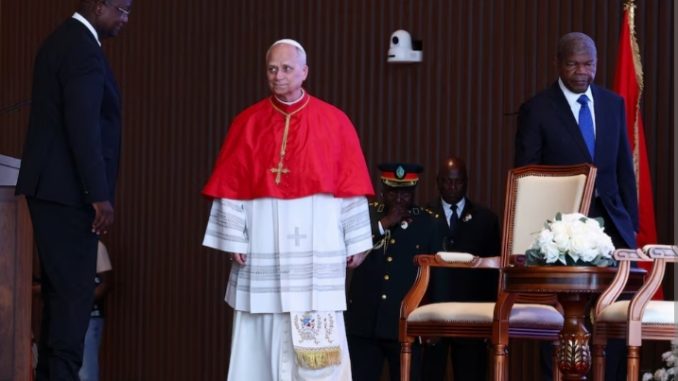
Speaking during a high profile stop in Angola as part of his ongoing African tour, the pontiff directly confronted a long standing paradox, a continent rich in oil, diamonds, and critical minerals, yet home to some of the world’s poorest populations.
He warned that elites, often in collaboration with foreign interests, continue to extract wealth without translating it into real development for ordinary citizens.
The Pope’s remarks cut sharply at leadership failures across the continent, accusing those in power of making grand promises of prosperity that never materialise.
Instead, he said, such governance patterns have entrenched inequality, deepened hardship, and in many cases contributed to instability and loss of life.
This message is not isolated. Throughout his multi nation visit spanning Algeria, Cameroon, Angola, and Equatorial Guinea, Pope Leo has consistently denounced what he calls a global system driven by greed, war, and exploitation.
In Cameroon earlier in the week, he warned that the world is being “ravaged by a handful of tyrants,” linking resource control, conflict, and human suffering in a single chain of responsibility.
ALSO READ: Hunger grows as millions in Sudan survive on one meal a day, NGOs warn of deepening famine
In Angola, a country that epitomises the resource curse despite decades of oil wealth, the Pope urged leaders to break what he described as a “cycle of interests” that prioritises profit over people.
He called for governance rooted in justice, accountability, and the equitable distribution of national wealth, stressing that true leadership must serve all citizens, not a privileged few.
Beyond political critique, the pontiff’s intervention also carries historical weight.
His visit includes symbolic engagements tied to Africa’s past exploitation, including sites linked to the trans Atlantic slave trade, highlighting a broader narrative that the continent’s resources, both human and natural, have long been subject to external and internal abuse.
Observers note that Pope Leo’s tone marks a significant shift in Vatican diplomacy.
Unlike the more cautious posture traditionally associated with the papacy, he has emerged as an unusually direct moral voice on global inequality, neo colonial economic structures, and governance failures, particularly in Africa.
His message, delivered to large and enthusiastic crowds across the continent, is both a condemnation and a call to action, urging Africans to resist systems that perpetuate exploitation and to demand leadership that converts natural wealth into human dignity, development, and life itself.