By Gideon Maxwell

April 2, 2026
A fresh political storm has erupted in Nigeria’s opposition space after David Mark openly confronted Bola Tinubu, asking pointedly, “what are you afraid of?” amid escalating tensions over the fate of opposition parties.
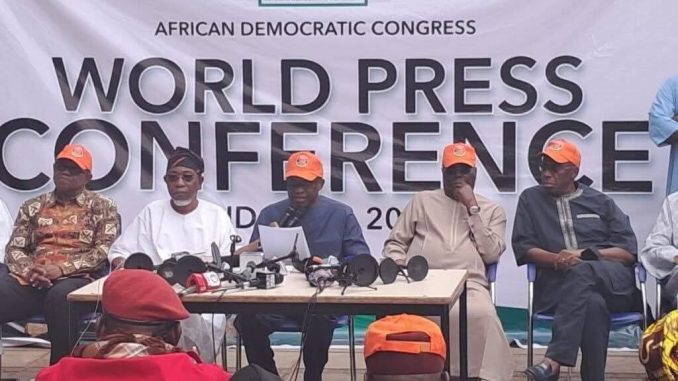
Mark, who currently serves as national chairman of the African Democratic Congress, ADC, made the remarks during a press conference in Abuja, reacting to the decision of the Independent National Electoral Commission, INEC, to derecognise factions within the party’s leadership structure.
The development followed INEC’s position that it would no longer recognise the rival leadership claims within the ADC, citing a Court of Appeal directive to maintain the status quo pending the resolution of ongoing legal disputes.
However, Mark’s faction rejected the electoral body’s interpretation, alleging external interference and political pressure, a claim that has intensified concerns about the neutrality of democratic institutions in the country.
ALSO READ: Tuggar resigns as foreign affairs minister ahead of 2027 Bauchi governorship race
In a strongly worded address, Mark questioned the necessity of actions he described as undermining political competition, especially given the ruling party’s dominance across the country.
“With about 90 percent of the National Assembly and over 30 governors under the APC, President Bola Ahmed Tinubu, what are you afraid of?” he asked.
He further argued that if the administration is confident in its performance, it should have no reason to fear a transparent electoral process.
“If you are convinced that you have done well… why are you afraid of a free, fair and transparent electoral contest?” Mark added, framing the issue as a test of democratic credibility.
Mark accused the ruling All Progressives Congress, APC, of systematically weakening opposition parties, warning that such actions could erode the foundations of Nigeria’s democracy.
According to him, the ADC represents one of the last viable opposition platforms capable of sustaining competitive politics, describing current developments as a “concerted effort” to dismantle that structure.
He cautioned that allowing such a trajectory to continue could signal a dangerous shift towards authoritarianism, stressing that citizens and political actors must resist any attempt to silence dissenting voices.
The controversy comes at a critical time in Nigeria’s political calendar, with growing alignments and realignments ahead of future electoral contests.
Analysts note that the dispute within the ADC, combined with INEC’s intervention, has broader implications for opposition cohesion and the integrity of Nigeria’s multi party system.
Mark’s remarks also reflect a wider anxiety among opposition figures who fear that institutional decisions could tilt the playing field in favour of the ruling party.
The issue has continued to generate reactions across political circles, with critics warning that perceived interference in party structures could undermine public confidence in electoral processes.
While the presidency has not formally responded to Mark’s comments, the unfolding situation is expected to deepen political debates around governance, electoral fairness, and the future of opposition politics in Nigeria.
At the centre of it all remains a direct and provocative question that now echoes across the political landscape, what exactly is the presidency afraid of.