
April 29, 2026

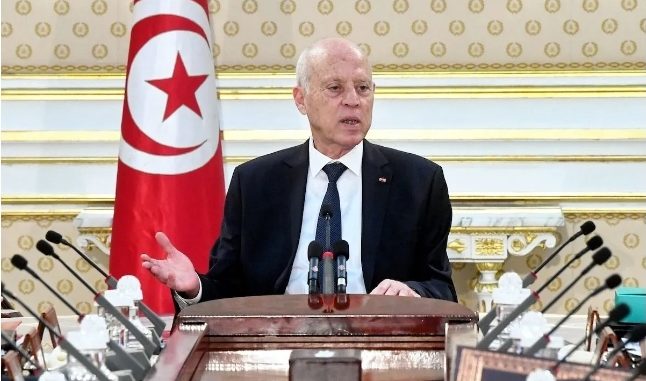
Tunisian President Kais Saied has abruptly dismissed Fatma Thabet, the energy minister, a move that has intensified political tensions in Tunisia and exposed growing divisions over the country’s energy transition strategy.
The decision, announced on Tuesday without a formal explanation, came just hours before parliament was scheduled to debate and vote on a series of controversial renewable energy bills. Salah Eddine Zouari has been appointed to temporarily oversee the energy portfolio, consolidating control within the executive at a sensitive legislative moment.
Power politics and policy timing
The timing of the dismissal is widely interpreted as strategic rather than routine. The proposed legislation sits at the centre of Tunisia’s push to reduce its heavy dependence on imported energy, a burden that has strained public finances through costly subsidies on fuel, gas, and electricity.
However, the reforms have triggered sharp backlash from labour unions, lawmakers, and sections of the political class. Critics argue that the structure of the deals, particularly the role of foreign firms, risks undermining national control over a critical sector.
Under the draft framework, foreign companies would be granted concessions to install solar infrastructure and exploit the generated energy for up to 20 years, renewable for another decade. The first five years would be tax exempt, with electricity sold to the state utility, Société Tunisienne de l’Électricité et du Gaz.
For supporters, the model promises rapid capital inflow and technological expansion. For opponents, it raises fundamental sovereignty concerns.
“Energy colonisation” fears
The strongest resistance has centred on claims that the reforms amount to a transfer of strategic assets to foreign interests. Some lawmakers have described the proposals as “energy colonisation,” arguing that the exclusion or marginalisation of the state electricity company weakens domestic capacity and control.
Tunisia’s powerful labour union federation has also warned that the agreements could entrench dependency rather than deliver genuine energy independence, calling instead for more balanced partnerships that preserve national leverage.
The political rhetoric around sovereignty reflects broader anxieties in Tunisia’s post 2021 political order, where centralisation of authority under the presidency has already drawn criticism from opposition groups and international observers.
Energy transition under pressure
At stake is not only political control, but Tunisia’s long term energy trajectory. The country currently imports the majority of its energy needs, making diversification an economic imperative.
Government plans aim to raise renewable energy’s share of the national grid from about 9 percent to 35 percent by 2030, backed by projects valued at roughly 500 to 600 million euros and targeting up to 600 megawatts of capacity.
These projects are expected to be concentrated in underdeveloped but sun rich regions in central and southern Tunisia, linking energy policy with regional development goals.
Yet the dispute highlights a recurring dilemma in emerging economies, balancing urgent infrastructure investment with concerns about economic sovereignty and equitable partnerships.
A pattern of executive intervention
The dismissal also fits into a broader governing style associated with Saied, who has repeatedly intervened decisively in state institutions since consolidating power in 2021.
While no official reason was given for Thabet’s removal, her exit follows mounting criticism of the energy deals and signals a willingness by the presidency to recalibrate or assert tighter control over contentious policy areas.
Thabet, appointed in January 2024, had overseen the ministry during a critical phase of energy sector reform but now exits at a moment when the policy direction itself is under intense scrutiny.
What comes next
With the legislation still under parliamentary consideration, the ministerial shake up injects uncertainty into both the legislative process and investor confidence.
Key questions remain unresolved, whether the government will revise the terms of the renewable energy contracts, how parliament will respond to public pressure, and whether Tunisia can accelerate its energy transition without triggering deeper political backlash.
What is clear is that energy policy has become a flashpoint, not just for economic reform, but for the broader struggle over sovereignty, governance, and the direction of Tunisia’s political system.