
By Marvellous Nyang

November 6, 2025
Former Vice President Yemi Osinbajo has called for a radical shift in how Nigeria and African governments approach economic growth, insisting that headline GDP figures are meaningless if they do not improve the daily lives of citizens.
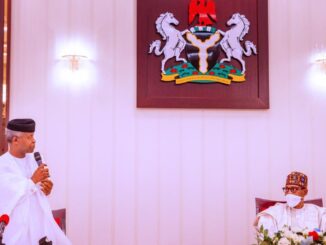
Speaking at the 65th anniversary of the Ford Foundation in West Africa in Abuja, Osinbajo said the country must move away from top, heavy, macroeconomic statistics and adopt bottom, up policies that prioritise social inclusion and welfare.
Osinbajo highlighted the growing disconnect between Nigeria’s reported GDP growth and the lived realities of ordinary Nigerians.
“Many people ask: ‘I cannot pay my children’s school fees or afford healthcare, where is this growth?’” he said, emphasising that economic planning should focus on outcomes for citizens, not just numbers on a page.
ALSO READ: Osinbajo urges overhaul of Nigeria’s legal system, faults courts’ obsession with technicalities
He stressed that economic strategies must target rural communities, informal workers, women and youth, who are often excluded from the benefits of GDP growth.
According to Osinbajo, these groups should be at the centre of investment planning to ensure growth reaches all layers of society.
Analysts have long criticised Nigeria’s GDP reports, noting that while the economy may appear larger due to rebasing, much of the growth comes from low, productivity services with minimal impact on citizens’ real income.
Osinbajo warned that relying solely on GDP as a measure of success risks creating “illusory growth” that masks structural economic weaknesses.
He called for inclusive investment, stronger industrialisation, and policies that directly improve welfare, saying that the country cannot afford to celebrate GDP numbers while unemployment, poverty and poor services persist.
Osinbajo concluded that governments must embrace economic planning that starts from the bottom, ensuring that growth is tangible and felt in communities, not just reflected in statistics.
“GDP should be a measure of people’s lives improving, not a number to boast about,” he said.