By Seyi Gesinde

May 14, 2026
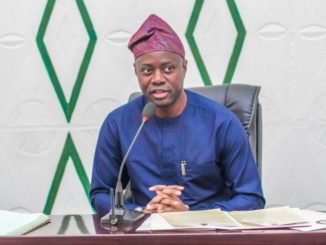
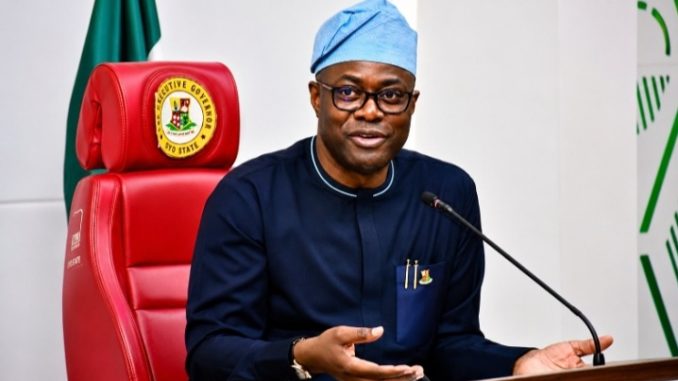
Fresh political tremors are spreading across Oyo and national Peoples Democratic Party, PDP, circles following Seyi Makinde’s latest presidential positioning around the Allied Peoples Movement, APM, coalition framework.
The development has intensified suspicions that the Oyo governor may have all along been executing a carefully staged political transition beyond the PDP.
While Makinde previously dismissed outright claims of dumping the PDP, his eventual open presidential declaration around the APM coalition framework has fundamentally altered the political interpretation of earlier signals that many within the PDP initially treated as speculative.
What once appeared to be quiet coalition manoeuvring is now increasingly being viewed by party insiders as part of a broader long term political recalibration tied to presidential ambition, opposition realignment, South West power balancing, and post office survival calculations ahead of 2027.
Multiple PDP insiders familiar with ongoing consultations said Makinde’s growing efforts to preserve simultaneous relevance within the PDP and emerging coalition structures are increasingly being interpreted internally as part of a wider presidential viability strategy.
According to one senior party source, “the governor’s moves are no longer being read as ordinary coalition politics. Many people now believe he is positioning himself for a national role while ensuring he does not lose control of his home structure.”
ALSO READ: I ignore Obi supporters’ online attacks to focus on issues, we don’t abuse — Amaechi
Party stakeholders familiar with internal discussions in Ibadan and Abuja said the emerging picture suggests a carefully managed dual structure, officially remaining within PDP while simultaneously expanding strategic operational links around APM as a fallback political vehicle.
The development is fuelling growing suspicions that Makinde may already have concluded that the PDP, weakened by prolonged leadership wars, zoning disputes, defections, and unresolved post 2023 tensions, may no longer provide a sufficiently stable platform either for his national ambition or for protecting his political machinery after leaving office.
What appears increasingly significant, according to insiders monitoring the unfolding alignments, is that the conversation is no longer only about whether Makinde may eventually align fully with APM, but whether Oyo’s 2027 succession battle has already been substantially transferred into the coalition architecture quietly forming around the smaller party.
The “alliance, not defection” framework
One of the earliest public signals came from Makinde’s allies insisting that what exists is “a PDP, APM alliance and not total defection.”
That distinction, according to the sources, is politically significant. Political analysts note that in Nigeria’s fluid power dynamics, governors rarely abandon ruling structures abruptly.
They often first build parallel operational platforms, gradually reposition loyalists, test public reaction, negotiate strategic power blocs, and only execute a full migration when the alternative structure has been sufficiently strengthened and politically stabilised.
Several recent developments now appear to support that pattern.
Findings indicate that elected officials and political associates considered loyal to Makinde have already begun quietly aligning with APM structures, with at least five House of Representatives members linked to the governor’s political camp moving from the PDP in what insiders describe as an early stage strategic realignment rather than isolated defections.
The defections were not random grassroots exits. They involved core loyalists within the governor’s political orbit, suggesting coordinated movement rather than spontaneous dissatisfaction.
A source familiar with internal consultations described the process as “soft alignment before eventual hard political decisions.”
ALSO READ: N33.8bn power fraud: Ex-minister jailed 75 years over Nigeria’s darkness
Simultaneously, tensions have reportedly emerged within sections of APM itself, amid claims that aspects of the party’s evolving nomination structure were already being informally shaped around political interests linked to Makinde and Bauchi State Governor Bala Mohammed.
That allegation has deepened suspicions within sections of the PDP that broader coalition engineering may already be underway beneath the surface of ongoing opposition negotiations.
According to sources familiar with coalition talks, Makinde’s relationship balancing with influential northern PDP figures is also being closely watched within opposition circles, particularly as calculations around possible South North coalition tickets and regional bargaining ahead of 2027 intensify.
Why Makinde may be hedging against PDP instability
Makinde has positioned himself over the years as one of the few surviving PDP governors with independent electoral value and strong regional influence.
However, the party’s national instability has continued to deepen.
The unresolved post 2023 crisis, regional rivalries, lingering Atiku loyalist tensions, South West fragmentation, recurring leadership disputes, and persistent fears of further defections have left many power blocs within the PDP uncertain about the party’s viability heading into 2027.
Multiple sources familiar with opposition consultations said discussions around broader anti APC coalition arrangements involving PDP elements, APM, and ADC linked actors have intensified in recent months.
A source involved in exploratory opposition talks in Abuja said many discussions are increasingly centred on what he described as “survival structures” capable of accommodating politicians unwilling to become politically stranded should the PDP crisis worsen.
Makinde’s recent presidential signalling around the APM coalition framework has therefore strengthened suspicions that what initially appeared to be tactical coalition engagement may in fact be part of a larger strategic migration project.
Sources familiar with the governor’s evolving political calculations said his camp appears focused on simultaneously building three critical pillars ahead of 2027:
Retaining influence within PDP power structures.
Preserving post office dominance through succession control in Oyo.
Positioning within any viable national opposition coalition capable of challenging the APC.
Political analysts note that governors nursing presidential ambitions rarely surrender control of their home states after office, making the succession battle in Oyo strategically inseparable from Makinde’s expanding national calculations.
If accurate, Makinde appears to be pursuing a dual pathway:
Retain influence within PDP while broader national negotiations continue.
Simultaneously expand alternative coalition structures capable of supporting future political ambition outside PDP if necessary.
That balancing act may explain why the governor has consistently avoided making definitive long term commitments regarding permanent loyalty to the PDP.
The real story: The succession project
Beneath the coalition politics and presidential calculations lies the more immediate struggle shaping Oyo politics, the battle over who succeeds Makinde in 2027.
That succession war has now become the centre of political calculations within the state.
Makinde himself publicly confirmed that he would unveil his preferred governorship candidate, a declaration that effectively validated long standing claims that the governor intends to directly shape the succession process rather than permit a completely open contest.
What followed only intensified speculation.
Multiple political sources now identify Abimbola Adekanmbi as the leading favourite within the governor’s emerging succession structure.
According to a source close to the consultations, Adekanmbi’s emergence followed nearly 92 hours of extended closed door political meetings involving influential stakeholders aligned with Makinde across multiple zones of the state.
Insiders familiar with the process described it not as an open democratic selection exercise, but as a tightly controlled succession engineering project designed around political continuity, loyalty management, and post office influence preservation.
The consultations reportedly factored in religion, zoning calculations, regional balancing, administrative continuity, and long term political loyalty.
A senior PDP stakeholder familiar with the process said the discussions were “far deeper and more politically layered than publicly acknowledged,” involving blocs across Ibadan, Ogbomoso, Oyo, and Ibarapa political structures.
That is classic Nigerian succession engineering.
The succession race beyond Adekanmbi
However, despite Adekanmbi’s growing visibility within the emerging structure, the governorship race in Oyo remains far broader and more contested beneath the surface.
Within the PDP framework, multiple competing blocs are quietly consolidating, particularly among lawmakers, political appointees, grassroots coordinators, and entrenched local power brokers uneasy with the perception of a predetermined succession arrangement.
Sources within the party identified Segun Ogunwuyi, Chief of Staff to Governor Makinde, as one of the most influential internal actors shaping succession calculations due to his strategic control around political coordination, government access, and inner circle operations.
Nureni Adeniran, Executive Chairman of the Oyo State Universal Basic Education Board, is also increasingly mentioned within continuity conversations among government loyalists seeking preservation of the current structure after 2027.
At the legislative level, Speaker Adebo Ogundoyin remains a significant institutional force whose influence across Oyo Central and within the Assembly structure continues to shape internal alignments and coalition calculations.
Federal lawmakers are similarly repositioning.
Honourable Adedeji Stanley Olajide, popularly known as Odidi Omo, is repeatedly mentioned by insiders as one of the active figures in federal level succession consultations, particularly within Ibadan political circles.
Honourable Folajimi Oyekunle is also emerging within younger PDP networks advocating stronger generational influence within the party’s future structure.
Sources familiar with grassroots mobilisation within the party said resistance to any imposed arrangement still exists across sections of the PDP, especially among local government actors and ward coordinators concerned that excessive centralisation could fracture the party before the general election.
According to one insider, “the real battle now is not just about who becomes governor, but who controls the political structure after Makinde leaves office.”
Why Adekanmbi matters
Adekanmbi’s emergence is politically strategic for several reasons.
First, he is viewed by insiders as relatively technocratic and less confrontational than several heavyweight aspirants within the Oyo PDP ecosystem.
Second, many within the governor’s camp reportedly see him as less likely to dismantle Makinde’s political structure after assuming office.
Third, his comparatively lower independent political weight may make him more dependent on the outgoing governor’s continuing influence after 2027.
That calculation is often central to succession politics involving outgoing governors.
Governors rarely support successors stronger than themselves politically.
The growing APM dimension has now complicated the equation even further.
If Makinde eventually channels his succession structure through a coalition platform tied to APM rather than relying solely on PDP structures, Adekanmbi could emerge not merely as PDP’s preferred aspirant, but as the operational face of a broader coalition arrangement controlled indirectly by Makinde loyalists.
Within political circles, Adekanmbi is already being quietly discussed as a possible coalition consensus option should the PDP crisis deepen further.
One political source described that development as “the clearest signal yet that the succession project may already be expanding beyond traditional PDP boundaries.”
That possibility has intensified speculation that the governor’s political structure may already be transitioning gradually away from exclusive dependence on PDP machinery in Oyo.
The contradiction in Makinde’s strategy
Makinde’s political challenge, however, remains enormous.
He is simultaneously trying to:
• Retain influence within PDP nationally.
• Expand coalition relevance outside PDP.
• Advance a growing presidential profile.
• Preserve strategic alliances across regional blocs.
• Secure succession control in Oyo.
• Preserve post office political bargaining power.
• Avoid premature accusations of betrayal from PDP loyalists.
That balancing act explains the continuing ambiguity surrounding his exact political destination.
However, his recent presidential positioning around the APM coalition framework has significantly narrowed the room for political ambiguity.
Many stakeholders within the PDP now believe the governor’s long term calculations may already extend well beyond the party’s future.
If true, retaining control of Oyo after office becomes even more critical.
No serious presidential aspirant wants to become politically homeless immediately after leaving power.
What insiders are whispering
Within South West political circles, three dominant theories are now shaping elite political conversations:
Makinde may remain formally within PDP until close to 2027 while simultaneously consolidating coalition structures through APM.
The Oyo succession battle may already have been substantially shaped behind closed doors in favour of Adekanmbi.
The governor’s broader calculations may ultimately be tied to a wider national opposition coalition arrangement beyond PDP.
A political figure familiar with South West coalition consultations described developments in Oyo as “a test model for hybrid opposition convergence before eventual political realignment.”
Whether those calculations succeed remains uncertain.
The APC is expected to aggressively target Oyo in 2027, particularly if Makinde appears politically vulnerable after office.
And history shows that “anointed candidates” in Nigerian politics do not always inherit the electoral strength of outgoing governors.
However, the looming confrontation between Makinde’s succession machinery and rival forces within and outside the PDP is shaping up as the ultimate test of his political dominance, as retaining control of Agodi Government House in 2027 appears crucial to preserving his influence, structure, and bargaining power after office.