By Seyi Gesinde

March 21, 2026
President Bola Ahmed Tinubu’s directive, conveyed through the office of the Secretary to the Government of the Federation, George Akume, has triggered a high stakes political realignment across Nigeria, compelling all political appointees with 2027 ambitions to resign on or before March 31, 2026.
The order cuts across ministers, ministers of state, presidential aides, agency heads, and chief executives of federal parastatals spanning the 36 states and the Federal Capital Territory, enforcing compliance with the Independent National Electoral Commission timetable for party primaries and effectively dismantling the advantage of incumbency within the ruling party structure.
Multiple presidency and party sources indicate the directive is expansive and uncompromising.
It covers not only cabinet members but also directors general, special advisers, and personal aides to the president.
Resignation letters are already being quietly processed as appointees race to meet the deadline and secure eligibility for party primaries.
A senior political strategist described the move as a deliberate institutional reset designed to “clean up the primary process and force early clarity of ambition,” adding that the presidency is keen to avoid internal distortions that could weaken party cohesion ahead of 2027.
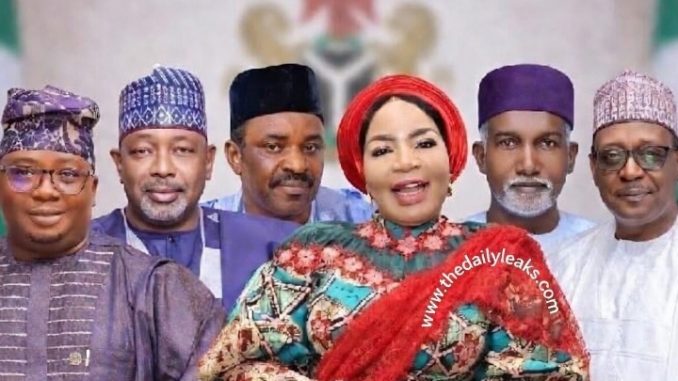
A number of prominent ministers with well established political trajectories are now effectively on the clock.
Adebayo Adelabu, minister of power, is widely expected to resign as he prepares for another governorship bid in Oyo State after previous attempts.
His political machinery has remained active, with sustained engagement across Ogbomoso and Oyo zones signalling a fully operational campaign structure.
Muhammad Ali Pate, minister of health and social welfare, remains a central figure in Bauchi political calculations.
Despite public denials, his name continues to feature prominently in governorship permutations, especially as the state prepares for a post Bala Mohammed transition.
ALSO READ: Makinde says PDP down to two governors but party not finished
Yusuf Maitama Tuggar has been even more visibly linked to Bauchi’s governorship contest.
His ongoing political friction within the state has reinforced perceptions that his ambition is no longer speculative but active.
Nkeiruka Onyejeocha, a long serving federal lawmaker, is strongly positioned for a return to the National Assembly.
Her legislative background and entrenched networks make resignation a near certainty.
Abubakar Kyari and Ahmed Alkali are also linked to emerging political interests, particularly in legislative and state level contests, with quiet mobilisation already underway in their respective regions.
Not every appointee with perceived ambition is expected to comply immediately.
Some ministers, particularly those without strong grassroots structures in their home states, are likely to delay resignation while assessing political viability.
Remaining in office offers continued access to federal influence, visibility, and strategic leverage within party negotiations.
In the case of Muhammad Ali Pate, his camp has consistently emphasised policy continuity and sector reforms, a position insiders interpret as a tactical delay rather than a definitive withdrawal from political consideration.
Others with interests in legislative roles may also hesitate, preferring to negotiate party tickets from within government rather than risk early exposure to intra party contestation.
Agency heads and senior aides fall into a similar category. Many are expected to hold back, calculating that post election appointments or negotiated placements could outweigh the risks of immediate resignation.
Political consequences across states
The directive is already reshaping political dynamics nationwide.
In Oyo, the anticipated exit of Adebayo Adelabu is reopening the governorship contest and reactivating rival blocs aligned with Seyi Makinde.
In Bauchi, the parallel ambitions of Yusuf Maitama Tuggar and Muhammad Ali Pate are intensifying internal rivalries, raising the risk of factional fragmentation within the ruling party.
In Abia, Nkeiruka Onyejeocha’s expected move is set to reshape the legislative battlefield, with implications for both party structure and opposition response.
Across other states and the Federal Capital Territory, Abuja, quieter but significant movements are underway as appointees weigh ambition against access to power.
A calculated gamble by tinubu
President Bola Ahmed Tinubu’s directive is not merely administrative. It is a calculated political intervention.
By forcing early declarations, the presidency is testing loyalty, flushing out hidden ambitions, and creating room to install trusted replacements ahead of the election cycle.
It also acts as a containment strategy against internal sabotage, ensuring that those who remain in government are fully aligned with the administration’s agenda.
For those who resign, the path ahead is uncertain and competitive. For those who stay, the risk is being perceived as politically irrelevant when the real contest begins.
March 31 will not just mark a deadline, it will define the fault lines of power, ambition, and loyalty as Nigeria edges closer to 2027.