
By Marvellous Nyang

March 28, 2026
The death toll from the ongoing floods in Kenya has climbed sharply to at least 108 people, marking a significant escalation in a disaster that has unfolded over several weeks of relentless rainfall.
The latest figures released by the National Police Service indicate that the fatalities have nearly tripled since the early days of the flooding in March, when initial reports recorded about 42 deaths, before rising progressively to 62, then 71, and now over 100 as search and recovery operations continue nationwide.
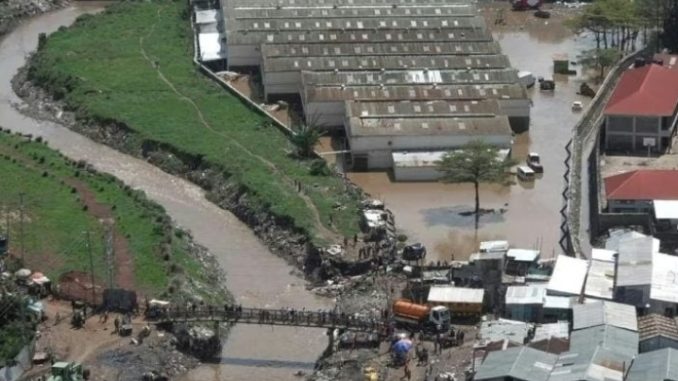
The flooding, which began around 6 March 2026, has been triggered by sustained heavy rainfall across large parts of the country, particularly affecting urban and low lying regions such as Nairobi and riverine communities.
Authorities report that more than 2,700 families have been displaced, with homes submerged, livelihoods destroyed, and entire communities forced to seek shelter in temporary facilities.
ALSO READ: El-Rufai’s mother dies in Cairo, national figures pay tributes as family mourns
Earlier in the crisis, the scale of displacement was already severe, with estimates showing over 34,000 people affected across at least 21 counties, as major rivers including the Nyando and Tana burst their banks, inundating farms and cutting off transport routes.
The humanitarian situation remains fluid and worsening.
Floodwaters have swept away vehicles, destroyed homes, and severely damaged infrastructure, including roads, bridges, and power systems. Air travel has also been disrupted, with operations affected at key airports due to waterlogging and poor visibility.
In Nairobi, which has emerged as one of the worst hit areas, dozens of deaths have been linked to drowning and electrocution, highlighting the dangers posed by submerged electrical installations and overwhelmed drainage systems.
The crisis has also exposed structural vulnerabilities.
Experts point to rapid urbanisation, poor drainage infrastructure, and settlements built on floodplains as key factors amplifying the disaster’s impact. Seasonal rains between March and May are common in Kenya, but climate variability and extreme weather patterns have intensified their severity in recent years.
Government response efforts have included deployment of emergency teams, evacuations, and relief distribution, with authorities warning that the risk of further flooding remains high due to saturated ground and overflowing waterways.
Health concerns are also emerging, with fears of water borne diseases such as cholera and malaria as stagnant floodwaters persist in affected communities.
Despite a slight easing of rainfall in some regions, officials caution that the full scale of the disaster is yet to be realised, as more bodies could still be recovered and additional communities may be cut off if rains resume.
The unfolding situation underscores the growing threat of climate related disasters in East Africa, with Kenya once again confronting the devastating human and economic cost of extreme weather.