By Seyi Gesinde

April 2, 2026
Today in the Christian calendar is Maundy Thursday, the sacred threshold before Easter, the day that draws the world into the final, weighty hours of JESUS CHRIST before the cross. It is not merely a date, it is a convergence of prophecy, power, fear, love, betrayal, and divine purpose, all unfolding within the charged atmosphere of Jerusalem.
Jerusalem that Thursday was not calm, it was swollen with expectation. Passover had drawn tens of thousands into the city, a festival rooted in deliverance, memory, and national identity. Every street told a story. Pilgrims arrived in clusters, dusty from long journeys, speaking in different accents, carrying lambs for sacrifice, their hearts tuned to remembrance of Egypt and hope for liberation again.
The Temple dominated everything, spiritually and physically. Priests moved in strict order, overseeing sacrifices, chanting, and ritual observances. The air was thick with the smell of blood and incense, a constant reminder of sin, atonement, and covenant. Religion was not quiet, it was loud, visible, structured, and deeply political.
Yet beneath this devotion was tension that could be cut with a knife. Rome was in control. represented imperial authority, stationed in Jerusalem during the feast precisely because of its volatility. Passover stirred dangerous ideas, freedom, deliverance, kingship. Roman soldiers lined the streets and guarded strategic points, their armour glinting under the sun, their presence a silent warning. Any hint of uprising would be crushed instantly.
The Jewish leadership walked a delicate line. The high priestly class, including figures like , had one overriding concern, stability. Their authority depended on cooperation with Rome. JESUS had become a problem they could no longer ignore. His teachings carried authority, His miracles stirred belief, and His boldness threatened their religious structure. Days earlier, He had entered Jerusalem to public acclaim, fulfilling prophecy and unsettling power structures, Matthew 21:8 to 11. Even more dangerously, He had cleansed the Temple, overturning tables and exposing corruption, Matthew 21:12 to 13.
By Thursday, the decision had been made in secret councils. The plan was clear, arrest Him quietly, avoid the crowd, eliminate the threat, John 11:47 to 53.
ALSO READ: Jesus’ resurrection: Embrace the transformative power of risen Love
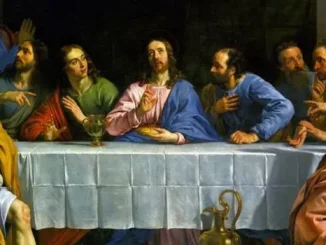
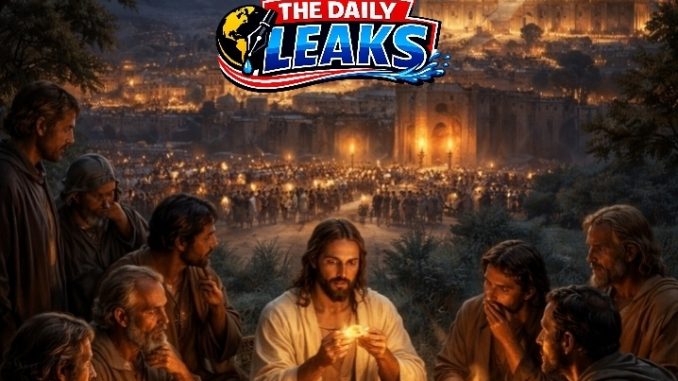
While the city moved with noise and ritual, JESUS moved with precision and awareness. That evening, He gathered His disciples in an upper room. The Passover meal began as tradition demanded, but it quickly became something far deeper. He took bread, broke it, and redefined it, Luke 22:19. He took the cup and spoke of a new covenant, Luke 22:20. In that moment, centuries of ritual pointed directly to Him. The lambs being slaughtered across the city foreshadowed the Lamb who sat at the table.
Then came a shocking act. The Teacher rose, took a towel, and washed the feet of His disciples, John 13:4 to 5. In a culture of hierarchy and honour, this was disruptive. Power knelt. Authority served. The kingdom He proclaimed was unlike anything Jerusalem had seen. He spoke plainly, John 13:14 to 15, redefining greatness as humility and leadership as service.
But the room was heavy. JESUS spoke of betrayal, and silence followed. One of them would hand Him over, Matthew 26:21. The tension was unbearable. Eyes searched each other. Judas sat among them, already aligned with the authorities, his decision sealed in darkness, Luke 22:3 to 6.
From that upper room, they moved into the night, crossing the Kidron Valley toward Gethsemane. The city behind them still pulsed with activity, unaware that history had reached its turning point. In the garden, under olive trees that had stood for generations, JESUS faced the full weight of what lay ahead.
His prayer was not symbolic, it was agonisingly real. Matthew 26:38, He confessed the depth of His sorrow. Then, in surrender, He prayed, Luke 22:42, yielding His will completely to the Father. The Gospel records even the physical intensity of that moment, Luke 22:44, a picture of anguish beyond ordinary human experience.
Meanwhile, the machinery of betrayal was already in motion. Judas arrived with a detachment of soldiers and officials, carrying torches and weapons, John 18:3. The quiet garden became a theatre of injustice. A kiss, a sign of affection, became the mark of betrayal, Luke 22:47 to 48.
JESUS did not resist. He stepped forward, identifying Himself, John 18:4 to 5. In that moment, divine authority and human violence met. The disciples, overwhelmed and afraid, scattered, Matthew 26:56.
Back in the city, the leaders moved swiftly. Night trials, hurried accusations, conflicting testimonies, all orchestrated to reach a predetermined outcome. The legal system bent under political pressure. Religion, meant to guide truth, became an instrument of expediency.
This was Jerusalem on that Thursday. A city celebrating deliverance while plotting the death of the Deliverer. A government enforcing order while permitting injustice. A religious system preserving structure while rejecting its fulfilment. A crowd preparing for worship, unaware that the ultimate sacrifice was already underway.
Maundy Thursday carries all of this weight. It is the collision of heaven and earth, of prophecy and politics, of love and betrayal. It reveals a JESUS who was not caught off guard, but who walked knowingly into suffering, fulfilling every word spoken before Him.
The mood of that day was layered, outward celebration, inward conspiracy, visible order, hidden chaos. Yet above it all was divine purpose. What looked like defeat was in fact the unfolding of redemption.
That Thursday was not the end of hope. It was the beginning of its fulfilment.