By Gideon Maxwell

November 12, 2026
Six months after it was officially declared, the devastating Ebola outbreak in the Democratic Republic of the Congo (DRC) remains out of control, compounded by severe international response gaps, ongoing conflict, and widespread community transmission.
In a sharp warning issued on Thursday, November 12, 2026, the international medical humanitarian organisation Médecins Sans Frontières (MSF) stated that frontline responders are being left with “empty hands and empty pockets” despite substantial international funding.
According to the latest official data, cumulative infections nationwide have surged past 11,042 cases, with at least 5,387 reported deaths.
The mounting crisis marks the second-largest and second-deadliest Ebola epidemic in recorded history, trailing only the 2014–2016 West African outbreak.
Persistent response gaps and hidden infections
Despite hundreds of millions of dollars allocated internationally, MSF reported that critical operational deficiencies continue to undermine containment efforts.
ALSO READ: How much water do you actually need to drink every day for your health?
Epidemiologists and public health experts estimate that roughly half of all actual Ebola infections are still going undetected, as surveillance systems falter and medical resources remain unevenly distributed across the country’s eight affected provinces.
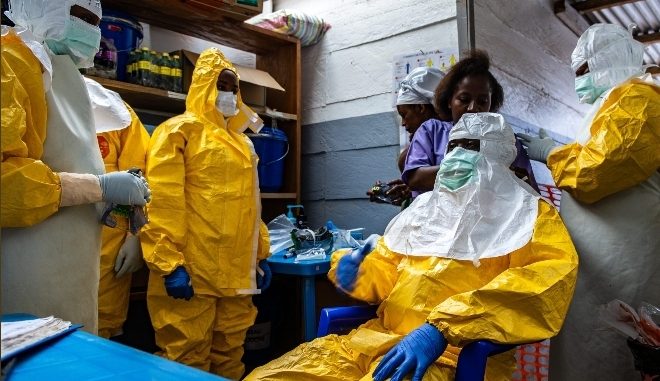
“Six months into the response, this situation is simply unacceptable,” said Dr Javid Abdelmoneim, MSF’s international president, pointing to untrained and unpaid local staff, ambulances without fuel, and severe shortages of supplies needed to manage suspected cases safely.
Unlike most historical outbreaks, this epidemic is driven by the Bundibugyo virus, a rare strain for which there is currently no globally approved vaccine or specific licensed treatment.
While clinical trials for experimental vaccines and therapeutics are underway, logistical roadblocks and raging regional conflicts have severely hampered access.
A crisis within a crisis: Conflict and insecurity
Efforts to contain the virus are continually throttled by deep-seated insecurity, particularly in eastern provinces such as Ituri and North Kivu.
Ongoing armed violence has repeatedly disrupted medical operations, forced the temporary closure of treatment centres, and left hundreds of patient contacts untraced.
In Ituri province, for instance, MSF noted that only nine per cent of the Ebola patients it treats were known contacts of existing cases, underscoring the collapse of contact tracing.
Local healthcare facilities have also become major hubs for transmission due to inadequate infection prevention and control measures.
Urgent call for operational overhaul
MSF is urgently calling on the Congolese government, United Nations agencies, and international donors to translate financial pledges into immediate, decentralised operational support on the ground.
Without a swift overhaul of community surveillance, better pay and equipment for frontline workers, and enhanced security guarantees for medical teams, health experts warn that transmission could persist well into next year and threaten to surpass the scale of the 2014–2016 West African epidemic.