
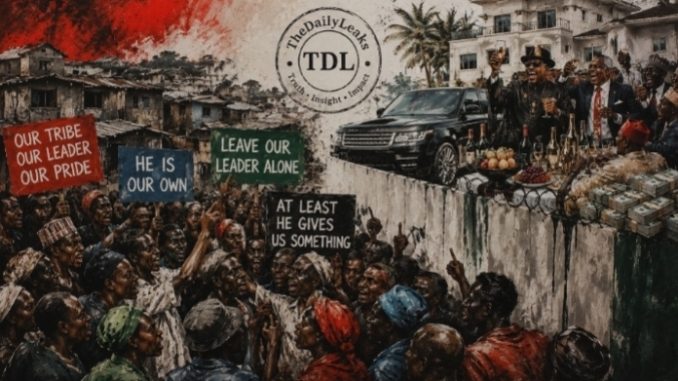
• The strange reality where people fight to preserve the very structures that limit their future

By Seyi Gesinde
July 6, 2026
Across societies, one of the most difficult human contradictions to understand is this, people can become deeply attached to systems, beliefs, and habits that continue to produce the very struggles and poverty they complain about.
A person may condemn poverty but defend the choices, leaders, cultures, and mindsets that reproduce it. A community may desire progress but resist the uncomfortable changes required to achieve it. A generation may cry out for opportunities while rejecting the discipline, sacrifice, and innovation needed to create them.
This is not simply a story about money. It is a story about the human mind.
It is about how people can become prisoners not only of circumstances, but also of beliefs.
The greatest tragedy of poverty is not only that it deprives people of resources. It is that prolonged hardship can gradually affect how people see themselves, their choices, and their future.
When people struggle for too long, poverty can become more than an economic condition. It can become a psychological environment that shapes expectations, lowers ambition, weakens confidence, and makes people accept conditions they would have rejected if they truly recognised their worth.
A person who does not know their value can settle for crumbs while defending those who keep the table empty.
This is the painful reality behind a society where some people complain about deprivation but defend the very structures that sustain it.
When poverty becomes a weapon
One of the most dangerous realities in struggling societies is when poverty becomes a tool of control.
When people are desperate, they become vulnerable to those who offer immediate relief instead of lasting solutions.
A hungry person may accept a small gift because hunger does not understand tomorrow. A struggling family may support a leader who provides temporary assistance because survival feels more urgent than accountability.
This is how poverty becomes weaponised.
When a person’s actual need is worth N100,000 but they are offered N1,000 to secure their loyalty, some may accept it, not because they do not understand their suffering, but because years of hardship have trained them to prioritise immediate survival over long term progress.
The tragedy is that the same poverty created by failed systems can become the tool used to protect those systems.
When people exchange their future for temporary relief
A society trapped in hardship can gradually develop a culture where what is received today matters more than what is lost tomorrow.
People may celebrate small benefits while ignoring the bigger question:
Why are we still poor after years of the same promises?
A handout may solve today’s problem, but it cannot replace good schools, functional healthcare, security, jobs, infrastructure, and policies that allow people to build sustainable lives.
ALSO READ: When poverty becomes a political strategy
The issue is not genuine support. A compassionate society should care for vulnerable people.
The danger begins when assistance becomes a substitute for empowerment, when people are kept dependent rather than equipped to become independent.
When identity replaces judgment
Another painful consequence of prolonged hardship is how it can influence decisions about leadership.
When people lose confidence in their own power, they may stop judging leaders by competence, character, vision, and results.
Merit becomes secondary.
Reason becomes negotiable.
Instead, choices can become dominated by ethnic, tribal, religious, or social loyalties, even when those choices produce leaders who lack the capacity to improve people’s lives.
The issue is not identity itself. Culture, heritage, and representation are important parts of society.
The danger comes when identity becomes a replacement for accountability.
When citizens defend leaders who do not know their struggles, do not understand their realities, and have no clear plan for their future, they unknowingly protect the conditions keeping them behind.
A person who understands their worth will not exchange generations of opportunity for temporary gratification.
When suffering becomes familiar
Human beings often become attached to what is familiar, even when it causes pain.
For someone who has experienced hardship for years, a different reality can feel impossible.
Poverty may shape not only what people have, but what they believe they can become.
A person who has never witnessed opportunity may distrust those pursuing it. A person raised to believe that nothing changes may resist those trying to create change.
The greatest prison may not always be a lack of resources.
Sometimes it is a limitation of imagination.
The poverty mindset that destroys ambition
Poverty is not only measured by income. It can also exist as a mindset.
It says:
“I cannot create opportunities.”
“Success belongs only to certain people.”
“There is no point trying because nothing changes.”
“Anyone who succeeds must have cheated.”
This mindset can destroy ambition before circumstances do.
Many people who transformed their lives first had to transform their thinking. They had to recognise their own ability, develop discipline, acquire knowledge, and believe that their circumstances could change.
The responsibility question
However, examining this issue must never become an excuse to blame people living in poverty.
Many people struggle because of real barriers, including corruption, weak institutions, poor education systems, economic instability, limited opportunities, and unequal access to resources.
The purpose is not to shame the poor.
The purpose is to expose a cycle where hardship becomes permanent because people lose the confidence to demand better, create better, and choose better.
A person can be a victim of circumstances without becoming a prisoner of circumstances.
Breaking the cycle
Transformation begins when individuals and communities start asking different questions.
Instead of:
“Who will save us?”
Ask:
“How can we build capacity?”
Instead of:
“Why do they have what we do not have?”
Ask:
“What principles produced their success?”
Instead of:
“What can we receive today?”
Ask:
“What can we create for tomorrow?”
Progress begins when dependency gives way to responsibility, when complaints give way to solutions, and when survival gives way to purpose.
The greatest revolution begins in the mind.
The most powerful change does not always begin with a new government, a new policy, or a new opportunity.
It begins when people challenge the beliefs that have limited them.
Changed thinking produces changed decisions. Changed decisions produce changed habits. Changed habits produce changed outcomes.
The poorest person is not always the one with the least money.
Sometimes it is the person who has lost the ability to recognise their own value and imagine a better future.
A society cannot rise higher than the mindset of its people.
The question every individual must answer is:
Am I fighting against the forces that keep me down, or have I unknowingly become a defender of the very systems that keep me there?