
‘We need innovative mechanisms to finance healthcare systems’ — Former VP

By Emmanuel Babafemi
June 29, 2026
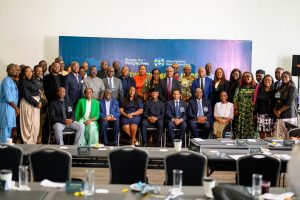
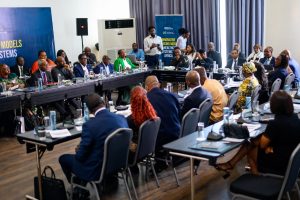
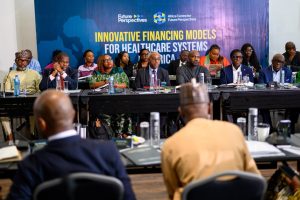
A renewed push to strengthen healthcare financing across Africa gained momentum following a high level roundtable convened in Lagos by Future Perspectives in partnership with the Gates Foundation.
The roundtable, held on 10 June, 2026, focused on Innovative Financing Models for Africa’s Healthcare Systems and featured a hybrid format designed to accommodate both physical and virtual participation from stakeholders across sectors.
Future Perspectives, founded by Prof. Osinbajo, organised the dialogue in collaboration with the Gates Foundation as part of broader efforts to catalyse new thinking around sustainable healthcare financing across the continent.
A statement issued on Monday, 29 June, 2026 by the Media Office of Nigeria’s immediate past Vice President, Prof. Yemi Osinbajo, SAN, GCON, and signed by Mohammed Brimah, said the engagement brought together senior policymakers, financiers, investors and health sector leaders to explore innovative financing models addressing persistent healthcare funding gaps.
In his opening remarks, Osinbajo warned that Africa’s healthcare challenges cannot be resolved through traditional public spending alone.
He stated that “government spending alone can never address the scale of the challenge,” noting that existing fiscal constraints continue to widen the gap between healthcare demand and supply.
He further observed that “most Nigerians continue to rely on out of pocket payments,” describing this as a structural weakness that limits access to quality and affordable healthcare services.
He explained that the purpose of the roundtable was to generate actionable solutions capable of mobilising blended capital from both public and private sources, stating that the goal was to identify “practical ways to finance healthcare through innovative and sustainable mechanisms.”
ALSO READ: Osinbajo spearheads multi-sector health financing and climate adaptation drive in West Africa
Delivering the keynote address on behalf of the Honourable Minister of Health and Social Welfare, Prof. Muhammad Ali Pate, the National Coordinator of the Presidential Initiative for Unlocking the Healthcare Value Chain, PVAC, Dr. Abdu Mukhtar, outlined key gaps in Nigeria’s healthcare financing structure.
He disclosed that “only 10 to 12 percent of Nigerians have health insurance,” highlighting the limited reach of existing coverage systems.
Mukhtar noted ongoing efforts to attract large scale investment through partnerships with institutions such as Afreximbank and the European Investment Bank, aimed at unlocking significant capital inflows into the health sector.
He also identified financing constraints facing small and medium sized providers, noting that “there is a missing middle, many businesses need just $2 to $5 million to grow, but struggle to access capital.”
Representing the Nigeria Sovereign Investment Authority, NSIA, Managing Director and Chief Executive Officer of MedServe, Dr. Tolulope Adewole, emphasised that demand side constraints remain a major obstacle to improved healthcare access.
He stated that “the bigger problem sits on the demand side,” explaining that widespread income limitations continue to restrict access to essential health services.
He added that stronger collaboration between public institutions, private investors and development partners would be critical to unlocking sustainable solutions, stressing that “collaboration is what will take us out of this challenge.”
From the private sector investment perspective, Managing Director and Chief Executive Officer of AfyA Care, Dapo Akisanya, said healthcare systems must be structured to attract capital while delivering measurable outcomes.
He stated that “healthcare can be structured as a profitable and scalable sector,” provided that investment frameworks are well designed and supported by strong institutional coordination.
Akisanya called for expanded use of blended finance and impact investment approaches to strengthen healthcare delivery across the value chain.
Chief Executive Officer of Chapel Hill Denham, Bolaji Balogun, reinforced the need for increased private sector participation, noting that government funding alone is insufficient to meet growing healthcare needs.
He stated that “government funding is wholly inadequate, and private capital is essential.”
He further explained that healthcare infrastructure requires long term, patient capital, with capital markets playing a central role in mobilising deep pools of investment.
Senior Investment Officer at the International Finance Corporation, IFC, Chishamiso Mawoyo, noted that Africa’s healthcare financing gaps also represent opportunities for innovation and investment.
She emphasised the importance of aligning financing models with local realities, stating that “healthcare providers serve local populations, so financing must reflect that reality.”
Deputy Director at the Gates Foundation, Ekenem Isichei, stressed that financing must deliver measurable outcomes beyond capital deployment.
He stated that “financing must translate to real impact,” adding that investments should ultimately result in “lives saved and livelihoods improved.”
He also noted that philanthropic capital should be used to catalyse broader systems capable of unlocking larger pools of blended finance.
Senior Health Financing Specialist at the World Bank, Dr. Olumide Okunola, underscored the foundational role of public financing in sustaining effective healthcare systems.
He stated that “without strong public financing, everything else is limited,” while calling for reforms aimed at reducing reliance on out of pocket expenditure.
He emphasised that sustainable healthcare reform requires strong government investment complemented by private sector participation.
Closing the session, Co Founder of Future Perspectives, Yemi Asekun, said the discussions would be translated into practical financing frameworks aimed at improving investment flows into the health sector.
He stated that “capital always follows capacity and management,” adding that Future Perspectives would continue working with stakeholders to develop viable models, including proposals for a national healthcare investment platform.
The statement noted that the roundtable was moderated by Serah Makka, Executive Director for Africa at ONE and a member of the Future Perspectives Board.
Other members of the Board present included Ambassador Adeyinka Asekun, Immediate Past High Commissioner of Nigeria to Canada, Maryamu Aminu, Head of Coverage, North and Government Relations at Iron Capital Partners Ltd, and Dr. Greg Jobome, former Executive Director and Chief Risk Officer at Access Bank.
Participants at the event represented a broad cross section of the development, finance and healthcare sectors, including Jumoke Olaniyan of the Nigeria Exchange Group, alongside senior representatives from the Clinton Health Access Initiative, Private Sector Health Alliance of Nigeria, Coronation Capital, Africa Capital Alliance, Blackrose Asset Management, Wema Bank, FirstBank, Access Bank, PharmaAccess, Healthcare Federation of Nigeria, Rigo, Anadach, Skyda Health Limited, DLM Capital Group, Tillit, Lily Hospital, Iron Capital Partners, TPG, Evercare, Leadway Holdings, Codix, National Health Insurance Authority, Johnson and Johnson, A connect, among others.
The engagement was described as part of ongoing efforts to strengthen collaboration between public institutions, private capital and development partners in building sustainable healthcare financing systems across Africa.