
• The people decide who stays, who returns, who breaks the mould

By Emmanuel Babafemi
August 15, 2026
Osun State stands at the threshold of another defining political moment as millions of voters across the state prepare to decide who will occupy the Government House in Osogbo for the next four years.
After months of campaigns, alliances, defections, counterclaims and intense political mobilisation, the wait is over. Today, Saturday, August 15, 2026, the people of the State of the Living Spring will speak through the ballot.
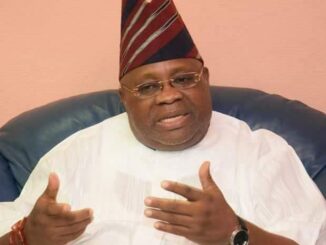
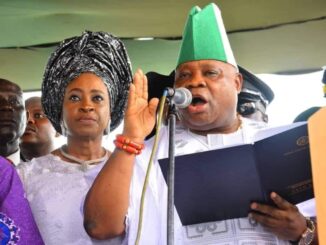
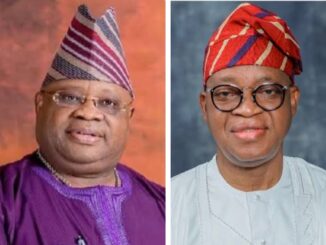
At the centre of the contest is Governor Ademola Adeleke, seeking another term under the Accord Party, facing the formidable challenge of the All Progressives Congress candidate, Munirudeen Bola Oyebamiji, while former Speaker of the Osun State House of Assembly, Najeem Salaam, flies the flag of the African Democratic Congress.
The contest has become more than a battle for Osogbo. It is a test of political structures, personal popularity, governance records, grassroots mobilisation and the ability of candidates and their parties to translate campaign promises into votes.
ALSO READ: Until you win
For Adeleke, Saturday represents a referendum on his administration and an opportunity to secure another mandate from the electorate.
His campaign has leaned heavily on his record in office, his populist appeal and the argument that Osun should continue on the path his administration has established.
For Oyebamiji and the APC, the election is an opportunity to reclaim Osun after the party lost the governorship to Adeleke in 2022.
The APC has presented its candidate as the vehicle for a return to power, backed by the party’s extensive political structure and its determination to reverse the outcome of the last governorship election.
Then comes Salaam, whose emergence under the ADC has injected another dimension into the race.
A former Speaker and experienced political figure, he represents the possibility of a third force breaking the conventional two party battle and reshaping the arithmetic of the election.
Yet, beyond the personalities and party banners, Saturday’s election carries a much larger significance.
More than 2.34 million registered voters are expected to participate across 3,763 polling units in the state’s 30 Local Government Areas.
The scale of the electorate makes the election one of the most closely watched off cycle governorship contests in Nigeria.
The stakes are equally high for the electoral process itself.
President Bola Tinubu has called for a peaceful and credible election, while concerns over violence, vote buying, logistics and the integrity of the process have remained prominent in the final days before the poll.
For the voters of Osun, however, the choice ultimately comes down to one fundamental question, who should lead the state for the next four years?
By the close of voting, the campaign posters will begin to disappear, the rallies will fall silent and the political rhetoric will give way to results.
Adeleke wants to remain in the Government House.
Oyebamiji wants to take it back for the APC.
Salaam wants to break the established equation.
Today, Osun decides.
And when the votes are counted, the State of the Living Spring will have written another chapter in its political history.