By Marvellous Nyang

February 4, 2026
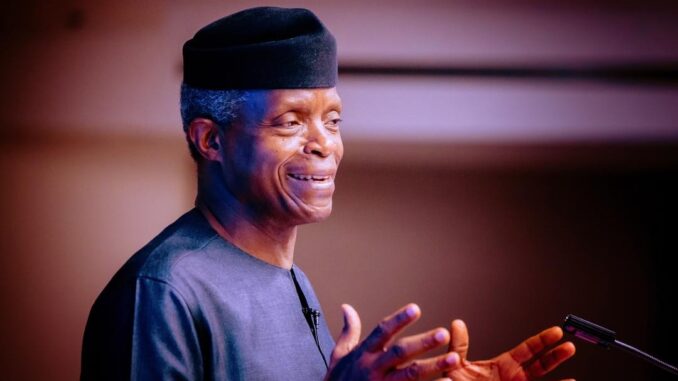
Former Vice President has called on government at all levels to demonstrate strong political will and embrace structured partnerships with the private sector to address Nigeria’s severe housing deficit, as he delivered a keynote address at the 2026 WEMABOD Real Estate Outlook in Lagos.
Speaking at the annual gathering organised by WEMABOD Limited at the Grand Ballroom of the Oriental Hotel, Victoria Island, Lagos, Osinbajo said the country’s housing crisis stems not from a lack of workable models but from weak political will and institutional challenges.
In his keynote titled “From Bodija to the Future: Unlocking Land and Infrastructure for Inclusive Housing – A Regional Agenda for Sustainable Urban Growth,” Osinbajo argued that governments must lead by providing land and essential infrastructure, while private developers bring capital and execution capability to make mixed‑income housing commercially viable.
ALSO READ: Osinbajo listed among leaders for Regal Influence Summit in Ghana
“Housing is not just a commodity but the cornerstone of socio‑economic transformation,” he said, stressing that inclusive housing will remain elusive if land and infrastructure are left solely to market forces.
Osinbajo drew lessons from the historic Bodija Housing Estate in Ibadan, describing it as a successful model of deliberate planning and infrastructure‑led development that facilitated a socially inclusive neighbourhood.
He emphasised that unlocking land and providing trunk infrastructure are key to making housing affordable and sustainable, urging policymakers to adopt a regional approach rather than fragmented strategies focused on isolated city markets.
The WEMABOD Real Estate Outlook 2026, themed “Unlocking Land and Infrastructure for Inclusive Housing: A Regional Agenda for Sustainable Urban Growth,” brought together stakeholders in real estate, finance, urban planning and government to explore coordinated frameworks aimed at expanding access to affordable housing and promoting sustainable urban development.
Osinbajo’s address underscored the need for deliberate policy reforms in land governance, public‑private collaboration and infrastructure planning to tackle Nigeria’s housing deficit and stimulate inclusive economic growth.
The event highlighted a growing consensus that long‑term, infrastructure‑driven planning is essential to bridge the gap between housing demand and supply, and to foster affordable, resilient cities across the region.