
By Amb. Umudjere Africaman

May 31, 2026
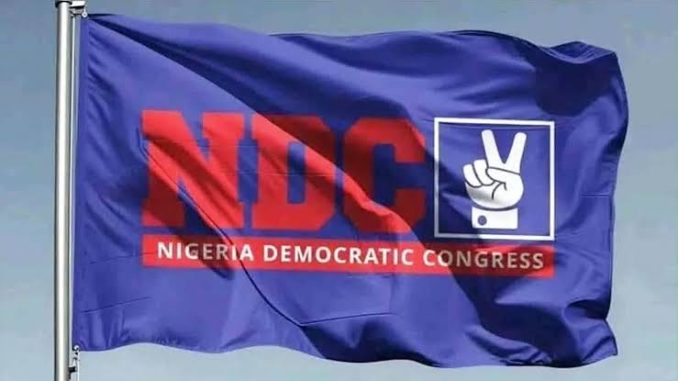
The emergence of new political movements often generates excitement acmong citizens who are dissatisfied with the existing political order. Many Nigerians yearn for a platform that can break away from entrenched political practices, promote merit, strengthen democratic institutions and place national development above personal interests. For some observers, the Nigerian Democratic Congress (NDC) appeared to offer such a possibility.
However, the conduct and outcome of its recent primary elections have raised serious concerns about whether the party can truly represent the change it promises.
One of the most important tests of any political organization is not its manifesto or public declarations but the manner in which it selects its leaders and candidates. Internal democracy is the foundation upon which credible political parties are built. When a party’s primary process is perceived as being dominated by money, influence and elite interests, it becomes difficult to convince the public that it will govern differently if entrusted with power.
Critics argue that the recent primaries exposed many of the same weaknesses that have long plagued Nigerian politics. Rather than rewarding competence, vision, grassroots support and integrity, the process appeared, in the eyes of some observers, to favor individuals with greater financial resources, stronger political networks and greater influence within party structures.
Such developments create the impression that political power remains accessible primarily to those who can mobilize wealth and patronage rather than those who possess the best ideas for national transformation. If this perception persists, it risks undermining public confidence in the party’s commitment to reform.
ALSO READ: Makinde clinches APM presidential ticket in Ibadan consensus vote
Many Nigerians had hoped that newer political platforms would provide a clear departure from the politics of godfatherism, transactional alliances and elite bargaining. Yet when primary elections appear to produce outcomes similar to those witnessed in traditional political parties, the distinction between the old and the new becomes increasingly blurred.
ALSO READ: Obi, Kwankwaso secure NDC presidential ticket amid 2027 political realignment
The danger is not merely electoral. It is psychological. Citizens who invest hope in alternative political movements may become even more disillusioned when those movements appear to replicate the very practices they were created to challenge. Such disappointment can deepen voter apathy and weaken faith in democratic participation.
This does not necessarily mean that the Nigerian Democratic Congress lacks capable individuals or that reform within the party is impossible. Political organizations can learn from their mistakes and strengthen internal democratic mechanisms. However, the recent primary election has provided critics with reasons to question whether the party is presently positioned to serve as the transformative force many Nigerians desire.
Ultimately, the credibility of any political platform depends on its ability to demonstrate that merit outweighs money, that principles outweigh influence, and that democratic procedures outweigh elite preferences. Until these values are consistently reflected in practice, many Nigerians may remain skeptical of claims that any new political movement represents a genuine pathway to national renewal.
The lesson is simple: a party cannot convincingly promise democratic change to a nation if its own internal processes fail to reflect the democratic ideals it advocates.
• Africaman is chairman, Africaman Development Initiative