By Seyi Gesinde

August 4, 2026
There is something every civilisation eventually discovers.
Power is not usually at its wisest when nobody questions it.
The greatest danger to authority has never been disagreement.
It has always been unquestioned agreement.
Every family knows it.
Every classroom knows it.
Every courtroom knows it.
Every scientific laboratory knows it.
Progress is rarely born where every voice sounds the same.
It is born where ideas are examined, challenged, refined and, when necessary, corrected.
Politics has never been exempt from that law.
Long before modern democracy acquired constitutions, elections and political parties, humanity had already begun wrestling with a larger question.
How should power itself be restrained?
The ancient Greek philosopher Socrates believed that an unexamined life was not worth living.
Perhaps an unexamined government is equally dangerous.
His relentless habit of asking uncomfortable questions eventually cost him his life.
Athens silenced the man.
History immortalised the questions.
His disciple, Plato, would later warn that one of the penalties for refusing to participate in public affairs is to be governed by inferior men.
Centuries afterwards, Aristotle argued that politics exists for the common good, not for the comfort of rulers.
The purpose of government, he insisted, is not merely to exercise power.
It is to pursue justice.
But justice rarely survives where power is never questioned.
ALSO READ: About to give birth
Much later, John Stuart Mill, in On Liberty, warned that silencing dissent does not merely silence an opponent.
It may silence the truth itself.
Even when an opposing opinion proves mistaken, society still benefits because truth itself becomes stronger after surviving honest examination.
The Austrian philosopher Karl Popper carried the argument even further.
He argued that the greatest political question is not,
“Who should rule?”
It is,
“How do we prevent rulers from causing too much harm?”
That single question transformed modern democratic thought.
It shifted attention away from personalities.
Towards institutions.
Away from rulers.
Towards accountability.
History reached the same conclusion.
Great nations are seldom preserved by governments alone.
They are preserved by institutions courageous enough to question governments.
That is why mature democracies do not merely celebrate those who govern.
They also respect those who scrutinise government.
Not because opposition is an enemy of power.
But because it is often the guardian of power’s conscience.
Britain institutionalised the idea so completely that it officially recognised His Majesty’s Loyal Opposition.
At first hearing, the expression sounds contradictory.
Loyal.
Yet opposition.
But therein lies one of democracy’s greatest insights.
One may oppose a government without opposing one’s country.
One may disagree with those in authority while remaining profoundly committed to the nation’s future.
History repeatedly vindicates such opposition.
Before the Second World War, Winston Churchill spent years warning Britain about the growing danger of Nazi Germany.
Many dismissed him as alarmist.
History eventually vindicated the warnings that politics had ridiculed.
ALSO READ: Now that Seyi’s surveillance jets are here
Ideas, history reminds us, are often resisted before they are respected.
Perhaps that explains why societies frequently misunderstand their most valuable opposition voices.
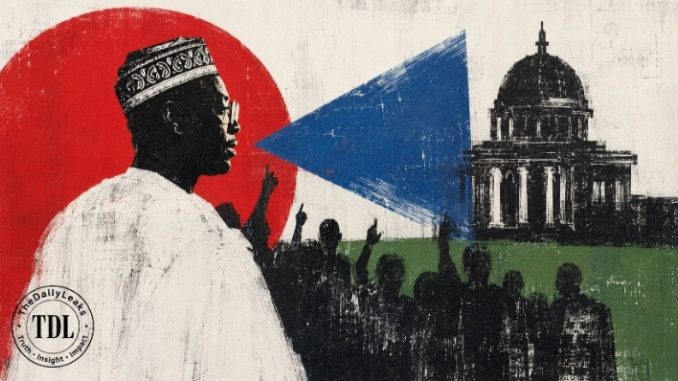
Nigeria once produced a man who came to embody the very idea of opposition.
His name was Obafemi Awolowo.
History remembers him simply as Awo.
Awo remains one of the most influential figures in Nigeria’s political history.
He is remembered for introducing free primary education.
For expanding access to healthcare.
For pioneering ambitious agricultural and industrial programmes.
For transforming infrastructure across the old Western Region.
For establishing what is widely recognised as Africa’s first television station, long before television reached several European countries.
These achievements alone would have secured him a respectable place in history.
Yet they are not what make him extraordinary.
History remembers many successful governments.
It remembers far fewer successful opposition leaders.
The remarkable thing about Awo was not merely that he governed.
Many have governed.
It was not merely that he contested elections.
Many have contested elections.
It was not even that he lost some of them.
History is filled with men who won elections.
And with men who lost them.
What distinguished Awo was something much rarer.
Even when he stood outside government, government could not comfortably ignore him.
That is a very different kind of political influence.
Governments have feared many politicians.
Awo belonged to a smaller and rarer category.
He was feared not because he shouted louder.
But because he prepared better.
They feared not merely his popularity.
They feared the quality of his arguments.
There is a profound difference between defeating a politician and defeating an idea.
Ideas are stubborn.
Ideas survive prisons.
Ideas outlive governments.
Victor Hugo once wrote,
“No army can stop an idea whose time has come.”
Awo understood that opposition was never meant to be an exercise in perpetual criticism.
Nor was it merely a waiting room for power.
It was an intellectual responsibility.
ALSO READ: When the poor defend the systems that keep them poor
An alternative government in preparation.
A place where policies were examined before they became disasters.
Where assumptions were questioned before they hardened into national mistakes.
His speeches were not sustained by rhetoric alone.
They were supported by research.
Economics.
Constitutional reasoning.
Long term planning.
He did not merely tell government it was wrong.
He attempted to demonstrate why.
And, more importantly, what could have been done differently.
That is why his opponents often disagreed with him.
But rarely dismissed him.
Popularity may win elections.
Preparation shapes history.
Vision shapes generations.
That is the difference between a politician seeking office and a statesman seeking a nation’s future.
Perhaps that explains why one of the most extraordinary episodes in Nigeria’s political history was still waiting to unfold.
The early years of Nigeria’s independence were marked by extraordinary hope.
They were also marked by extraordinary political conflict.
Regional rivalries deepened.
Constitutional disagreements hardened.
Politics became increasingly bitter.
Eventually, Awo was convicted of treasonable felony and sent to prison.
To his supporters, he had become a prisoner of conviction.
To his opponents, a defeated rival.
History, however, had not finished writing his story.
Then came 1966.
The First Republic collapsed beneath a military coup.
Months later, another coup plunged the country into even greater uncertainty.
Nigeria stood at one of the most fragile moments in its history.
The nation needed more than soldiers.
It needed ideas.
It needed economic discipline.
It needed intellectual clarity.
Then history performed one of its greatest ironies.
The man who had once been confined behind prison walls was suddenly needed outside them.
Awolowo was released and invited into national service under the military government of General Yakubu Gowon.
He later became Federal Commissioner for Finance and Vice Chairman of the Federal Executive Council.
He was not formally the second in command of the government.
Yet he occupied one of its most influential civilian positions.
That distinction matters.
For the lesson lies not in titles.
It lies in trust.
There are moments in history when governments discover that the opposition they once resisted possesses some of the very ideas needed to rescue the nation.
Nigeria experienced one of those moments.
The prison door opened.
Not merely because a prisoner was being released.
But because a nation in crisis recognised the value of a prepared mind.
History offers similar moments elsewhere.
During the Second World War, Britain assembled a national coalition, drawing capable men from different political traditions because national survival demanded competence above partisanship.
When nations confront their greatest tests, they often discover that wisdom is too precious to be imprisoned by political rivalry.
Perhaps that explains why history reserves its highest honour not for those who merely acquire power.
But for those whose ideas remain indispensable, whether they occupy office or not.
That was Awo’s greatest strength.
His influence did not begin with office.
Neither did it end outside office.
It rested on something governments have always struggled to suppress.
Prepared ideas.
Enduring convictions.
A disciplined mind.
And perhaps that is where the real conversation about opposition begins.
That is precisely why the title of this essay is not,
When Awo governed…
It is,
When Awo was the opposition…
Because the greater lesson lies not merely in how he exercised power.
It lies in how he understood power before possessing it.
Government is expected to govern.
That is its constitutional responsibility.
Opposition carries a responsibility no less important.
It must question without becoming destructive.
It must disagree without becoming dishonest.
It must expose weakness without manufacturing falsehood.
It must challenge today’s policies while preparing tomorrow’s alternatives.
That is a far more demanding assignment than issuing daily criticism.
The political philosopher Hannah Arendt reminded the world that politics exists because human beings are plural.
People think differently.
Reason differently.
Imagine differently.
Democracy, therefore, is not designed to eliminate disagreement.
It is designed to civilise it.
Healthy opposition is not democracy’s inconvenience.
It is one of democracy’s greatest protections.
Somewhere along Nigeria’s democratic journey, however, something appears to have changed.
Opposition gradually stopped being an institution.
It slowly became another waiting room for power.
Convictions became negotiable.
Ideologies became portable.
Party platforms became temporary addresses rather than enduring beliefs.
One begins to wonder…
When did politicians begin changing parties more frequently than they changed convictions?
When did ideological debates quietly surrender to political calculations?
When did defections become more newsworthy than ideas?
What does it mean when ruling parties and opposition parties increasingly sound almost identical?
Can democracy remain healthy when those entrusted with scrutinising government become spectators?
Or when yesterday’s fiercest critics become today’s loudest defenders without first explaining what changed?
These are not questions about one political party.
They are questions about the health of democracy itself.
For democracy does not become stronger simply because elections are conducted.
It becomes stronger when citizens are presented with genuine alternatives.
Alternatives in ideas.
Alternatives in policy.
Alternatives in vision.
That was Awo’s understanding of opposition.
He never treated it as the road to power.
He treated it first as a duty to the people.
Perhaps that is the standard history now places before every generation.
Not whether another politician can become another Awo.
But whether today’s political culture would even permit one to emerge.
Or would it quietly absorb him into the familiar machinery of defections, alliances, convenience and the endless pursuit of office?
That question may ultimately be more unsettling than any answer.
History has a curious way of exposing every generation.
Not by the monuments it builds.
But by the standards it abandons.
Every age inherits examples.
The real test is whether it preserves them or merely celebrates them.
Nigeria remembers Awo.
His portraits hang on walls.
His speeches are quoted.
His achievements are commemorated.
His name is invoked across political divides.
Yet history asks a question memory alone cannot answer.
Have people merely remembered the man…
…or have they remembered the principles that made the man?
There is a difference.
Statues preserve faces.
Ideas preserve nations.
Perhaps that is why the real tragedy is never the absence of extraordinary leaders.
The greater tragedy is the gradual disappearance of the values that once produced them.
Democracies do not begin to decline the day governments become powerful.
Governments have always sought power.
Democracies begin to decline the day opposition forgets why it exists.
The day criticism loses its intellectual foundation.
The day ambition replaces conviction.
The day office becomes more important than obligation.
The day power itself becomes the destination instead of the instrument.
When that happens, government becomes less accountable.
Opposition becomes less credible.
The greatest burden eventually falls upon ordinary citizens.
Perhaps that explains one painful irony of contemporary Nigeria.
When Awo was an opposition, government never slept comfortably.
Today, citizens are often the ones who stay awake.
Awake over inflation.
Awake over insecurity.
Awake over unemployment.
Awake over an uncertain future.
That observation is not an attack on any particular government.
It is a reminder that democracy functions best when power knows it will be intelligently questioned.
History will always produce governments.
Its rarer gift is principled opposition.
That is why Obafemi Awolowo occupies such an enduring place in Nigeria’s story.
Not simply because he governed.
Not simply because he built.
Not simply because he dreamed.
But because even when he stood outside power, he understood that opposition was never an occupation.
It was a public trust.
A duty to the people.
Perhaps that is the question his life still leaves before every democracy.
Not whether it can produce another Awo.
But whether it still understands why it once needed one.
Perhaps that is why history never really says goodbye to certain men.
Long after they have departed, they continue asking questions their generation never fully answered.
Awo is one of them.
His greatest legacy may not be the schools he built.
Or the roads.
Or the hospitals.
Or the television station that announced Africa to itself before much of Europe had embraced the medium.
Important as those achievements remain, they were products of something deeper.
A philosophy.
A discipline.
A conviction that politics exists to improve the human condition.
That conviction did not disappear when he left office.
Neither did it disappear when he entered prison.
It remained intact because it was never dependent upon office.
Office merely gave it expression.
That is why the title of this essay could never have been,
When Awo was in government…
Governments come and go.
Administrations rise and fall.
Manifestoes are written and forgotten.
Election victories eventually become footnotes.
But the principles that sustain a democracy endure far longer than the governments that temporarily administer it.
That is why history remembers Awo not merely as a Premier.
Not merely as a Federal Commissioner.
Not merely as a presidential candidate.
History remembers him because he demonstrated that the strength of a democracy is measured not only by those who govern.
It is equally measured by those courageous enough, prepared enough, and principled enough to oppose.
And perhaps that is the question still echoing across Nigeria today.
Not whether another Awo will come.
History will produce its own personalities.
The real question is whether Nigeria still possesses the political culture capable of recognising, nurturing and listening to such a voice when it finally appears.
For if a nation loses that capacity, the tragedy is not that it has no Awo.
The tragedy is that, even if one emerged, nobody would know what to do with him.
That would not merely be the loss of an opposition.
It would be the loss of a democratic ideal.
And that would be a far greater tragedy for any nation than the defeat of any political party.
Because governments change.
Democracy survives only when principles do.