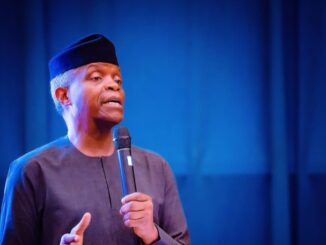

Former Vice President of Nigeria Yemi Osinbajo has commended the Enugu State Government over its Smart Green Schools initiative, describing it as a bold and forward looking model for education reform and child development.

Osinbajo made the remarks during a visit to the Governor of Enugu State, Peter Ndubuisi Mbah, where both leaders reviewed the ongoing rollout of the solar powered schools being established across the state’s 260 wards.
He explained that the Smart Green Schools programme integrates modern learning facilities with clean energy infrastructure, while also embedding healthcare services within the school system to support child wellbeing and development.
According to him, each school is equipped with a clinic staffed by trained nurses who provide essential healthcare services, including vaccinations for children who may have missed routine immunisation.
ALSO READ: Osinbajo highlights Africa’s role in reshaping global development cooperation at AfricaXchange 2026
He further noted that the initiative reflects a broader vision of combining education with preventive healthcare, ensuring that children are supported both academically and medically within the same environment.
Osinbajo also highlighted Enugu State’s commitment to education funding, noting that 32.27 per cent of the 2026 budget has been allocated to the sector, one of the highest proportions by any state in Nigeria.
He added that this investment is being strengthened by advanced teacher training programmes aimed at improving instructional quality and learning outcomes across the state.
Osinbajo commended the administration of Governor Mbah for what he described as a visionary and structured approach to educational transformation, noting that the model could serve as a reference point for other states seeking sustainable reform in the sector.