
By Seyi Gesinde

October 10, 2026
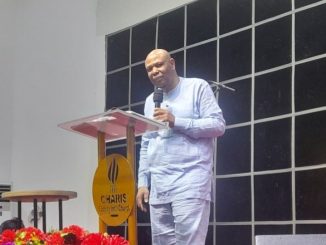
A charismatic minister of the gospel, Rev. Kayode Opemiyan, has warned that satisfaction with little success, excessive attachment to past achievements and the fear of losing existing gains can hinder people from experiencing greater accomplishments in life, business and ministry.
Rev. Opemiyan gave the warning while ministering on the topic, “The Enemies of Much More”, on the second day of Biazo 2026, with the theme, “Much More”, anchored on Ephesians 3:20.
He challenged believers, entrepreneurs, students and other participants to recognise the potential within them, overcome limiting mindsets and take deliberate steps towards fulfilling their aspirations.
According to the cleric, the power required for greater accomplishments is already available to the believer, although it may remain dormant without the appropriate response and action.
“Once you are born again, that power of GOD is already in you,” Rev. Opemiyan said, stressing that the presence of divine power should inspire believers to pursue possibilities beyond their present achievements.
He explained that the vision of a greater future begins with the individual, noting that many people carry bigger dreams but fail to take the necessary steps to bring them to reality.
ALSO READ: Pursue ‘much more’ through faith, action, not wishes, Pastor Jaiyebo charges believers at Biazo 2026
“The picture of the future is inside an initiator,” he said, drawing attention to the biblical assurance that GOD is able to accomplish more than human expectations through the power working within believers.
Ephesians 3:20 states, “Now unto him that is able to do exceeding abundantly above all that we ask or think, according to the power that worketh in us.”
Rev. Opemiyan maintained that experiencing much more requires dissatisfaction with one’s present level of achievement, not in the sense of ingratitude, but as a determination to grow beyond existing limitations.
He described much more as an attitude of hunger for greater possibilities and the ability to see a bigger picture of the future.
According to the minister, everyone has an idea of what they want their future to look like, but certain enemies must be confronted before those aspirations can become reality.
“There are enemies that want to destroy your dreams,” he said.
Satisfaction with little success
Identifying satisfaction with little success as the first enemy, Rev. Opemiyan warned that modest achievements could become obstacles when they make people believe they have reached their highest potential.
He explained that a businessperson who makes money from an initial venture might mistakenly conclude that the achievement represents the best possible outcome, thereby losing the motivation to expand.
He cautioned that success should inspire further development rather than create complacency.
The cleric urged participants to retain the vision of greater possibilities, using the assurance in Ephesians 3:20 to reinforce his message that present achievements should not become the limits of future expectations.
The danger of dwelling on past achievements
The second enemy, according to Rev. Opemiyan, is excessive concentration on past success.
He observed that success can sometimes prevent people from recognising new opportunities, particularly when they become preoccupied with celebrating previous accomplishments instead of preparing for the future.
“Success many times can block you from seeing the future,” he said.
He added that dwelling excessively on past achievements could encourage people to relax when they should be taking further steps towards growth.
“You can’t dwell too much on past success. He is the GOD of now. You need to see the picture of your future,” the minister said.
Using the changing nature of innovation as an illustration, Rev. Opemiyan noted that what is considered the best today could become outdated tomorrow.
“There will always be a new model of today’s best, it will be stale tomorrow,” he said, urging participants to remain forward looking, adaptable and committed to continuous improvement.
He also cited GOD’s promise of a new beginning in Isaiah 43:19.
Isaiah 43:19 states, “Behold, I will do a new thing, now it shall spring forth, shall ye not know it? I will even make a way in the wilderness, and rivers in the desert.”
Rev. Opemiyan urged his audience to stop allowing previous achievements and experiences to dominate their outlook, stressing the need to recognise and prepare for new opportunities.
Fear of losing existing gains
The third enemy he identified was the fear of losing what one had already acquired.
He explained that this fear could make business owners distrust others, refuse to delegate responsibilities and position themselves as the sole authorities in their organisations.
According to the cleric, such an approach could limit growth because people remain essential to building sustainable enterprises and accomplishing greater objectives.
“There is nothing you can do without people. They are the major key in achieving where GOD is taking you to,” he said.
He illustrated the point with the account of Abraham and Lot in Genesis 13, when the two men separated because their possessions had become too great for them to remain together in the same area.
Rev. Opemiyan used the account to highlight the contrast between decisions driven by fear of losing existing gains and the confidence required to embrace greater possibilities.
Abraham allowed Lot to choose his preferred territory first, demonstrating his willingness to trust GOD rather than insist on securing what appeared to be the most advantageous option.
Genesis 13:9 records Abraham’s words, “Is not the whole land before thee? separate thyself, I pray thee, from me: if thou wilt take the left hand, then I will go to the right, or if thou depart to the right hand, then I will go to the left.”
The minister encouraged participants to develop confidence in GOD and avoid allowing the fear of losing what they possess to prevent them from pursuing future opportunities.
He further drew attention to Peter’s experience after the resurrection of Jesus Christ, when Peter returned to fishing.
John 21:3 states, “Simon Peter saith unto them, I go a fishing. They say unto him, We also go with thee. They went forth, and entered into a ship immediately, and that night they caught nothing.”
Rev. Opemiyan explained that Peter’s return to fishing provided an opportunity to reflect on the relationship between previous activities and the greater assignment that lay ahead.
ALSO READ: moni‘Your present battle will announce your rising,’ Pastor Moji Jaiyebo declares at 2026 Charis Making Your Life Count Conference
He pointed to the encounter between Jesus and Peter, in which Jesus asked Peter whether he loved Him and instructed him to care for His followers.
John 21:15 states, “So when they had dined, Jesus saith to Simon Peter, Simon, son of Jonas, lovest thou me more than these? He saith unto him, Yea, Lord, thou knowest that I love thee. He saith unto him, Feed my lambs.”
The cleric said the encounter illustrated the importance of recognising when GOD was directing one’s attention towards a new responsibility rather than remaining confined to previous activities.
Rev. Opemiyan urged participants to maintain an inner conviction that GOD could accomplish far more than their present circumstances suggested.
“There should be a fire in you to show you that GOD is more than what you are seeing,” he said.
Business people must combine faith with enterprise
Addressing businesspeople, Rev. Opemiyan emphasised the importance of maintaining productive ventures while pursuing spiritual assignments.
He cited Peter’s fishing enterprise and Paul’s tentmaking occupation as examples of individuals who had practical means of supporting their activities.
He noted that Peter was a fisherman who owned a boat, while Paul engaged in tentmaking alongside his ministry.
The minister’s message was that believers should not automatically discard existing productive activities when pursuing greater assignments, but should develop the structures and values required to sustain their work.
He outlined five principles that businesspeople should embrace to achieve much more, including zeal, courage, willingness to take calculated risks, freedom from fear and genuine love for customers.
Zeal is essential for greater accomplishments
Rev. Opemiyan identified zeal as a critical requirement for achieving greater results, explaining that people who lack commitment to their work cannot expect to accomplish much more.
He referred to Paul’s account of his journey to Damascus in Acts 26:12, which describes his mission under the authority of the chief priests.
Acts 26:12 states, “Whereupon as I went to Damascus with authority and commission from the chief priests.”
He used Paul’s commitment to his assignment to encourage participants to pursue their responsibilities with determination and enthusiasm.
According to the minister, people who desire to lead others must also learn to persuade them and communicate their vision effectively.
He challenged business owners to cultivate the dedication required to improve their services, expand their reach and inspire confidence in those who work with them.
Courage to confront challenges
The minister also urged participants to develop the courage to pursue their assignments despite difficulties.
He noted that Paul encountered persecution, threats and repeated attempts on his life, yet continued to spread the Gospel.
Rev. Opemiyan said Paul’s example demonstrated the importance of remaining committed to a worthwhile assignment even when the path ahead appeared dangerous.
He stressed that the fear of difficulties should not prevent people from taking necessary steps towards their aspirations.
“If you are not ready to take a step in life, you can’t have much more,” he said.
He added that people who wanted to achieve greater results must be prepared to move beyond familiar territory, confront uncertainty and make decisions that could open new opportunities.
Take calculated risks and break the chain of fear
Rev. Opemiyan further identified risk taking as an essential element of growth, explaining that people who confront their fears can reach greater heights.
“When you dare your fear, you get to greater heights,” he said.
He urged participants to distinguish between reckless decisions and calculated risks, encouraging them to assess opportunities carefully without allowing fear to become an excuse for inaction.
He also warned against allowing the fear of change to keep individuals and businesses tied to familiar achievements.
According to him, the willingness to pursue new opportunities is necessary for sustained progress, particularly when previous results reveal the possibility of achieving more.
Genuine love for customers
The minister identified genuine love for customers as another important principle for business growth.
“If you want to have much more, you need to have love for the people,” he said.
He encouraged business owners to see customers as people whose needs, trust and satisfaction deserve genuine attention, rather than viewing them merely as sources of income.
He stressed that businesses seeking sustainable growth must build relationships, understand customer needs and demonstrate consistent commitment to delivering value.
Structure and culture are essential for sustainable growth
Concluding his message to businesspeople, Rev. Opemiyan emphasised the need to establish sound structures and a strong organisational culture.
He explained that structure provides the framework through which people, resources and activities are organised, while culture consists of the shared beliefs, values and practices that guide how the organisation operates.
“Structure is a pattern, while culture is a belief of the pattern,” he said.
He maintained that businesses require both elements to remain effective and sustainable, noting that good intentions alone cannot guarantee long term success without proper organisation and consistent practices.
According to the cleric, structure provides an organised pathway for achieving objectives, while culture ensures that the people within the organisation understand, accept and sustain the principles guiding its operations.
He encouraged entrepreneurs to build systems that allow their businesses to grow beyond their personal involvement, while cultivating values that support accountability, teamwork and customer satisfaction.
“Never throw away what you have, but it takes structure and culture to have much more,” Rev. Opemiyan said.
His message underscored the need for believers and businesspeople to overcome complacency, stop relying excessively on past achievements, confront the fear of losing existing gains and take deliberate steps towards a greater future.
He stressed that the desire for much more must be supported by faith, courage, zeal, calculated risk taking, genuine relationships and the structures needed to sustain progress.